When someone suddenly has trouble speaking, understanding language, reading, or expressing themselves, it can feel overwhelming for both them and the people around them.
For many families, these changes can happen unexpectedly after a stroke, brain injury, or another neurological event, leaving loved ones searching for answers and support.
One common cause of these communication difficulties is aphasia, a language disorder that affects how a person processes and uses language.
Aphasia can make it difficult to express thoughts clearly, understand conversations, read, or write, even though the person’s intelligence and personality remain intact.
Because communication is such an important part of daily life, relationships, and independence, these challenges can feel frustrating and isolating.
The good news is that meaningful improvement is possible with the right care and support.
Speech therapy can help individuals with aphasia strengthen communication skills, develop new strategies, and reconnect with the people and activities that matter most to them.
In this article, we’ll explore what aphasia is, common causes and symptoms, how it can affect communication, and how speech therapy can support recovery and quality of life.
What Is Aphasia?
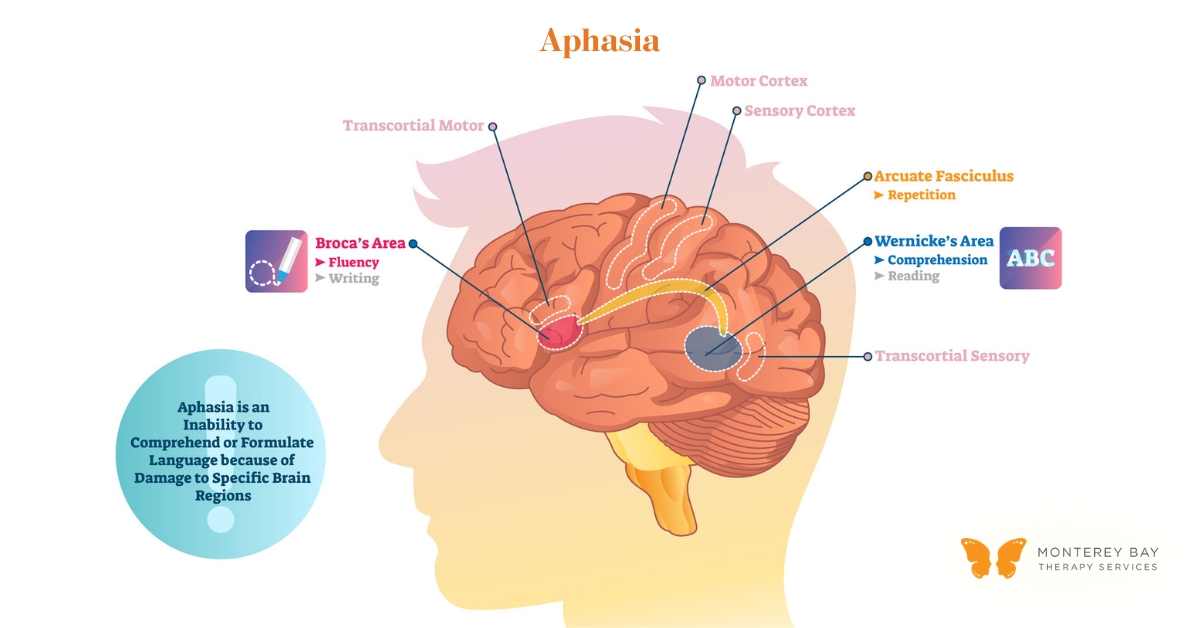
Aphasia is a language disorder caused by brain damage.
It affects how a person communicates, not their intelligence or ability to think.
People with aphasia may know exactly what they want to say, but struggle to find the right words.
Others may hear spoken words, but struggle to understand their meaning.
Some people have a mix of both challenges.
It most often happens suddenly, usually after a stroke or brain injury.
It can also develop slowly due to conditions that affect the brain over time.
Aphasia looks different for everyone.
Some people have mild difficulty finding words.
Others have more significant communication challenges.
No matter the level, aphasia can affect daily life, relationships, and confidence.
What Are the Most Common Causes of Aphasia?
Aphasia happens when the parts of the brain that control language are damaged.
This damage can occur for several reasons.
The most common cause is a stroke.
A stroke can block blood flow to the brain or cause bleeding in the brain.
Falls, car accidents, or head injuries can damage language areas of the brain as well.
Less commonly, brain tumors can press on or damage areas involved in speech and language comprehension.
Encephalitis, a rare brain infection, can cause aphasia as well.
It’s also important to understand what aphasia is not caused by.
For example, it’s not caused by muscle weakness or hearing loss.
Aphasia is caused by damage to the language centers of the brain.
What Are the Symptoms of Aphasia?
Aphasia symptoms depend on which part of the brain is affected and the extent of damage.
Symptoms can range from mild to severe.
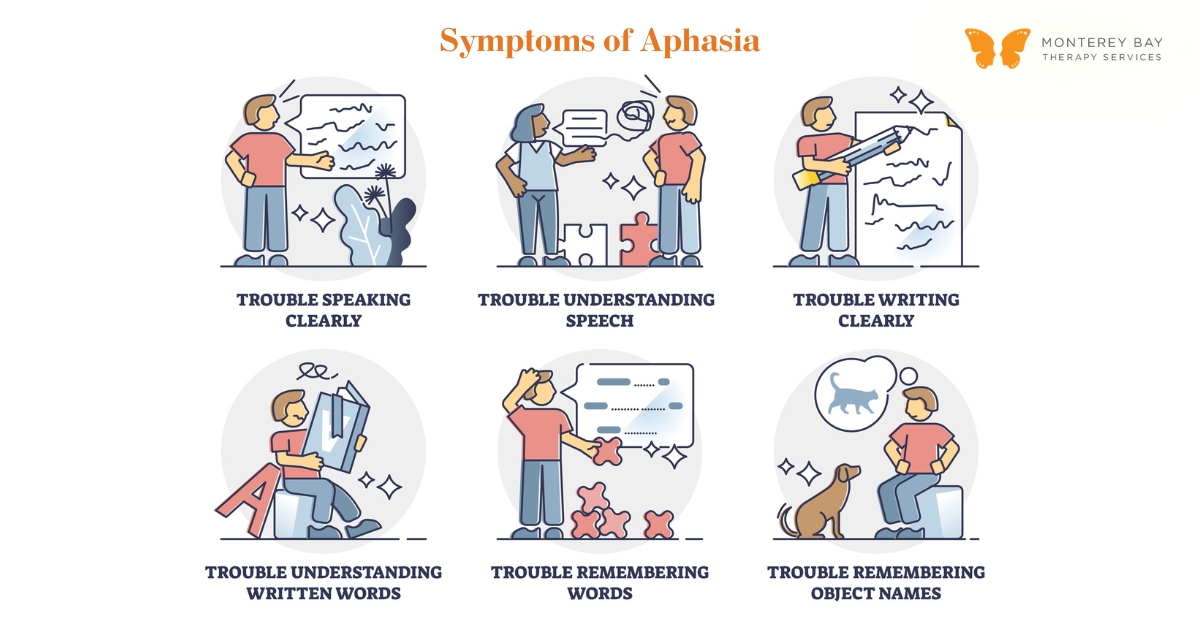
Common signs of aphasia include:
- Speaking in short or incomplete sentences
- Using the wrong words or sounds
- Trouble finding the right word
- Difficulty understanding spoken language
- Problems reading or writing
- Saying words that do not make sense
Some people may only have trouble in one area, such as speaking.
Others may struggle with several parts of communication.
These changes can be frustrating for both the person with aphasia and their loved ones.
It is important to remember that aphasia affects only your loved one’s language skills.
Their thoughts, feelings, and personality stay the same.
Can a Person with Aphasia Understand You?
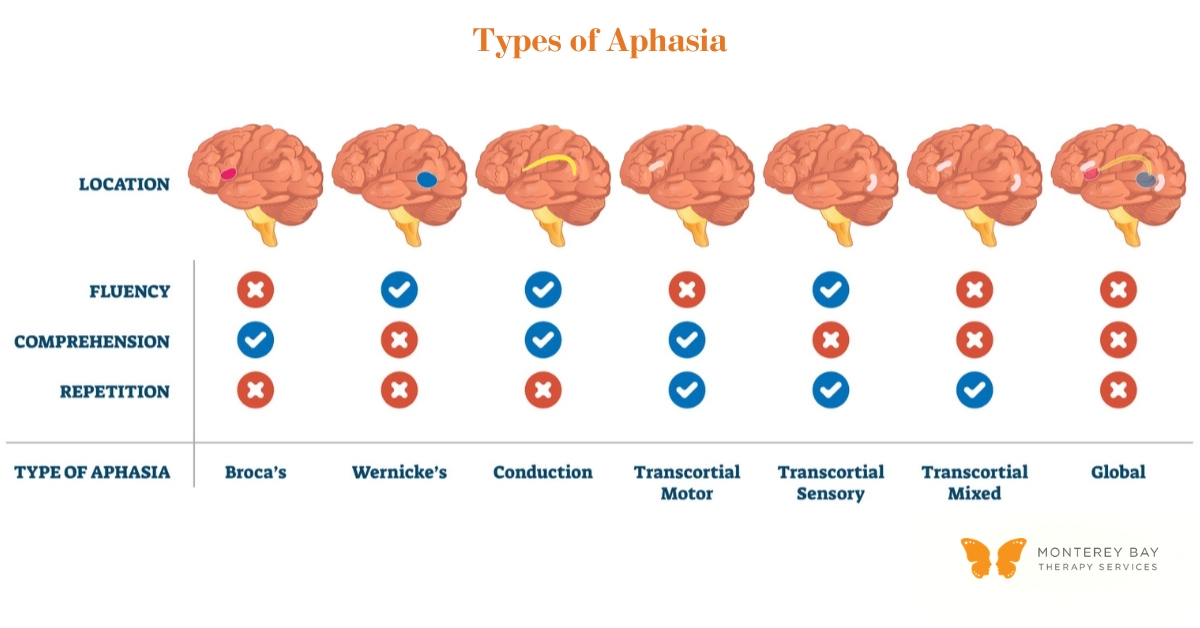
Understanding is different for each person with aphasia.
In some cases, your loved one may understand what you say but struggle to respond.
This pattern is often called expressive aphasia.
They know what they want to say, but the words will not come out the way they want.
In other cases, they may speak easily but struggle to understand spoken or written words.
This is called receptive aphasia.
It is also possible to have both expressive and receptive challenges.
This is known as mixed aphasia.
Because aphasia affects people in different ways, it’s important to be patient with your loved one.
Speak slowly, use simple sentences, and give extra time for responses.
Patience and kindness make a big difference.
What Is the Best Treatment for Aphasia?
There is no single treatment that works for everyone with aphasia.
Recovery depends on the cause, the severity, and the person’s overall health.
However, speech therapy is the main treatment for aphasia.
Aphasia often affects more than just speech.
Many people need support from a care team that includes:
- Speech therapists
- Occupational therapists
- Physical therapists
- Neurologists
- Primary care providers
Together, this team supports communication, mobility, daily tasks, and overall quality of life through coordinated therapy services tailored to each person’s needs.
At Monterey Bay Therapy Services, we offer both speech and occupational therapy for those with aphasia.
Working together as part of a broader care team, therapy can play a key role in supporting recovery.
Progress may be slow, but meaningful improvement is possible.
Let’s take a look at how.

How Speech Therapy Helps People with Aphasia
Aphasia speech therapy focuses on helping people communicate in ways that matter most to them.
Therapy is personalized, supportive, and built around real-life needs.
Your speech therapist will begin with an assessment of your loved one’s expressive and receptive communication skills.
They’ll also gather information about your loved one’s health history, daily communication challenges, and current needs.
In particular, your speech therapist may look for other overlapping speech or neurological conditions, such as dysarthria or apraxia.
From there, they will develop a therapeutic plan to help.
Speech therapy may help by:
- Improving word-finding skills
- Strengthening understanding of spoken language
- Supporting reading and writing
- Teaching alternative ways to communicate
- Helping family members learn supportive communication strategies
In terms of recovery, everyone is different.
Some people experience significant recovery, while others continue to need ongoing support over time.
Your speech therapist will work to help your loved one express themselves and reconnect with others.
For many families, working with a local provider offering aphasia speech therapy in Monterey Bay makes it easier to stay consistent and involved in care.
Book Your Appointment with Monterey Bay Therapy Services Today
Speech therapy can play a meaningful role in helping individuals with aphasia reconnect with others and regain confidence in communication over time.
Whether aphasia affects speaking, understanding, reading, or writing, personalized therapy can help strengthen the communication skills that matter most in daily life.
With the right support, many people with aphasia make meaningful progress in how they express themselves, participate in conversations, and engage with family, friends, and their community.
Recovery looks different for everyone, but compassionate care and consistent therapy can make a powerful difference in quality of life and independence.
At Monterey Bay Therapy, we offer in-clinic care in Monterey Bay and online therapy services across California, making it easier to access support that fits your needs and lifestyle.
You can explore the areas we serve and how we deliver care across California to find the best option for you or your family.
Our team of therapists works closely with clients and caregivers to create practical, individualized plans that extend beyond each session and into everyday communication and routines.
If you or someone you love is experiencing communication challenges related to aphasia, support is available and meaningful progress is possible.
Book an evaluation today and take the first step toward more confident and meaningful communication.